Registreren: Blijf op de hoogte met Insight On
Abonneer u vandaag nog op onze podcast om automatisch op de hoogte te worden gehouden van nieuwe afleveringen. U vindt Insight On op Amazon Music, Apple Podcasts, Spotify en YouTube.
Door Craig Taylor / 25 Jun 2026 / Onderwerpen: Devices , Device lifecycle , Digital transformation
WestJet wilde af van verouderde, papiergedreven processen. Flight crews sjouwden dagelijks met zware handleidingen, voerden handmatig regelgevingsupdates door en regelden dienstwisselingen via papieren formulieren. Door Apple iPads uit te rollen in elke cockpit en cabine transformeerde WestJet de dagelijkse werkervaring van duizenden medewerkers en maakte het werk eenvoudiger, sneller en efficiënter.
Als voormalig steward wist Craig Taylor uit eigen ervaring hoe omslachtig de papieren werkwijze was. Na meer dan 15 jaar aan boord nam hij de rol van change champion op zich om de overstap naar Apple iPads te begeleiden. Hij besefte dat digitale transformatie niet draait om technologie alleen, maar vooral om mensen. Daarom ontwikkelde hij trainingen, ondersteuningsprogramma's en een grootschalige uitrolaanpak die WestJet-medewerkers hielpen de nieuwe manier van werken succesvol te omarmen.
De eerste stap naar digitalisering bleek niet zonder uitdagingen. WestJet’s oorspronkelijke deviceleverancier leverde niet altijd wat was afgesproken, waardoor vertragingen, foutieve leveringen en operationele inefficiëntie ontstonden. Na een uitgebreide selectieprocedure realiseerde WestJet zich dat succes afhing van één betrouwbare, lokaal gevestigde partner die het volledige device lifecycle management kon verzorgen: van aanschaf en implementatie tot support en vervanging. Zo kon het team zich richten op de luchtvaartoperatie in plaats van op leveranciersbeheer.
Volgens Richard Okopien van Insight Canada ligt de echte waarde niet in de aanschaf van devices, maar in alles wat daarna gebeurt. Waar een traditionele reseller hardware levert en vervolgens uit beeld verdwijnt, zorgt een managed lifecycle-partner ervoor dat apparaten gedurende hun hele levenscyclus optimaal blijven functioneren. Van configuratie en reparaties tot hot-swap vervanging en doorlopende ondersteuning: alles wordt centraal beheerd. Zo kan een WestJet-medewerker die een defecte iPad heeft rekenen op een snel geconfigureerd vervangend apparaat, terwijl piloten toegang hebben tot vooraf ingestelde reserve-iPads op belangrijke luchthavenhubs.
In deze documentaire-achtige aflevering volgen we Craig's weg van een kleine gemeenschap in Newfoundland naar het beheren van de device-infrastructuur van een van Canada's grootste luchtvaartmaatschappijen. Het verhaal biedt een unieke kijk achter de schermen en laat zien wat er nodig is om duizenden Apple iPads elke dag operationeel en vluchtklaar te houden.
Vond u deze aflevering interessant? Deel hem dan met een collega.
Heeft u een onderwerp dat u graag besproken wilt zien of een vraag waarop u antwoord wilt krijgen? Neem dan contact met ons op via jillian.viner@insight.com
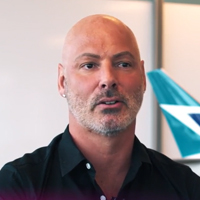
Craig Taylor
Service Owner – Mobility, WestJet
Audio transcript:
Jillian (00:02):
Hello and welcome to a special episode of Insight On. I'm your host, Jillian Viner, and I'm really excited for what you're going to hear today. While we usually sit down with leaders and technology experts and dig into the thinking behind their technology decisions, today we're telling a story. One, we went all the way to Calgary, Canada to capture. Now, if you're typically an audio only listener, I'd encourage you to watch the YouTube version of this one. Before we dive in, big thanks to WestJet and Apple for sharing their story with us and making this episode possible. All right, buckle up and let's fly.
Craig (00:45):
So you understand in aviation, there is no pause button. You need everything to go seamlessly. An irregular operation is costly. It's annoying and for most guests, it's really not what they want when they show up for their flight.
Jillian (01:00):
Every day more than 700 West Jet flights lift off and behind every one of them, long before the cabin door closes, there's a small glowing device in the hands of flight attendant and a story about how it got there. I'm Dillian Viner and this is Ready for Takeoff, a story about flight, technology, and the people who make it all click. To understand the story, you first have to start
Craig (01:30):
With Craig. Dream shop actually, I think. Yeah. Yeah. Born and raised in very small towns. So born and raised in Newfoundland Labrador at a town of thousand, moved to a town of 500 and the only way in is by a two and a half hour boat ride in Northern BC. So getting out of those little hicks and being able to see something else other than the trees and the mountains and everybody's like, "Oh, it's so beautiful." I'm like, "I've seen it. " So that kind of is a big stick for me as well.
Jillian (01:57):
Craig Taylor signed with WestJet 23 years ago, employee number 5523. He was a flight attendant for 15 and a half of those years and in that time he saw the airline industry change. The world got faster and the demands of everyone doing the work from the ticket counter to the cabin, well, they got a little bit heavier.
Craig (02:18):
Patience is such a big thing in the air, honestly. If people could just be a little more patient in the aspect, I get that traveling is very aggressive these days, specifically with irregular operations, weather, things like that. Scheduling for flight attendants. I really recognize it in the faces of my sort of colleagues, if you will, or any other airline too, like consider colleagues. The day they've had, they're a little worse of wear, tired, et cetera like that, but they're still trying their best to put that smile forward.
Jillian (02:48):
Part of what makes travel so stressful, weather delays, these are things outside of anybody's control, but there's one piece of the chaos that bugged Craig more than anything else because it felt fixable and it was something that everybody saw, everybody felt, and it was a heavy black bag of paper.
Craig (03:06):
We had basically a paper version of our flight attendant manuals and the pilots had a big black bag that sat with them in the flight deck that had all of their FOMS, comms, et cetera, which are all their manuals and stuff like that. So very non-efficient at all. Whenever Transport Canada would make a change, we would have to go through, we would be given a piece of paper that we would have to find the section in the paper manual to find where to insert that and put it in the right place. We always got fam checked in case of incorrect insertion.
Jillian (03:41):
A fam check is short for a familiarization check, which means an operations person stand at the cabin door waiting to verify that every page of your manual was in exactly the right spot before you were allowed born.
Craig (03:52):
You're like, "Oh, I hope it's right." Yeah, a little anxiety, right?
Jillian (03:54):
Every change printed and manually added into a binder. Flight tens were basically carrying encyclopedia of their jobs in a black tote bag.
Craig (04:02):
Back in the day, man, it was a very different process for that and specific shift trades. We had to do that manually. It was paper. It was like you would go into the crew room and you write, "Here's my pairing number, here's where it's going, " and put it in a little box and somebody would come and look through them. Oh, I'll take that one, sign off the bottom and then submit it in an envelope that had to go over to.
Jillian (04:18):
This sounds so archaic.
Craig (04:20):
Very archaic. Very inefficient.
Jillian (04:22):
In 2017, Westjet began planning for a switch. They did the research, landed on Apple devices, and then went looking for a partner to help make it all work.
Craig (04:33):
2018 was my last flight.
Jillian (04:36):
Craig stepped off the line and into a new role, Change Champion. He was one of three across the country and their role really was to help ease the transition from paper processes to digital ones. That meant new devices, new apps and new workflows.
Craig (04:51):
Was a temporary role that they posted. It was a six-month term and I just applied to it because I've always been using Apple devices pretty much my whole life, honestly, when we had them. Obviously, it's 3GS. We're
Jillian (05:04):
Not the
Craig (05:04):
IPad generation. I've always been a tinkerer, so I always like to work my way and figure out things when I don't understand or don't know. We got an iPad in our hands with a specific suite of apps that were loaded on that would be eventually what we would initially start with on the device as a managed device. And then we got to go around to gates, to aircraft, to flight attendants, show up in the crew room and just show them the iDevice, explain what's coming and how it's going to work and how it's going to benefit their lives and things like that. They extended the role three times because they obviously decided that they needed some support out there for these devices. They couldn't just, "Here's your iPad, have fun." And then it turned into a sort of a trickle effect or dominal effect into what was a requirement and what we needed for support.
Jillian (05:44):
They also set up a tech bar so people on site could come with an issue and get immediate hands-on support. And just like that, a kid from a town of 500 was suddenly running a piece of national infrastructure.
Craig (05:54):
I show up at the campus here at Westchit. I go into the class, they book me for two hours and then I say, "Okay, turn them on. "
Jillian (06:00):
He starts every class the same way.
Craig (06:02):
I asked the question right off the bat at sort of like, how many people here are Apple users and how many people are Android users? And usually it's most predominantly Apple. I probably get two or three hands in a 25 so class of people that are Android users. I make a joke about an Android device. I really like, sorry about your lives.
Jillian (06:18):
The joke does real work because for those two or three Android users, Craig now knows that the next two hours of training it has to feel like a soft landing and not a pop quiz.
Craig (06:27):
I want to make sure that they are familiar with the device. So like the power button, where is it? Yeah. Literally, right? Yeah. And specifically how to do the two main troubleshoots, which is a forced close of an app or how to do a hard reboot, right? A lot of people, I'm not going to lie, do not know how to do a hard reboot.
Jillian (06:41):
Sometimes I need a hard reboot. I
Craig (06:43):
Think we all do for sure.
Speaker 3 (06:46):
Your employees want Apple devices. Your IT team needs simplified management. With Insight and Apple, you get both devices employees love and seamless integration. Visit us at insight.com/apple to get started.
Jillian (07:02):
Here's where the story takes a turn because rolling out a few iPads is one thing, but keeping thousands of them flying across every base, every flight deck and cabin, well, that's something else entirely. And in aviation, when a device goes down, the consequences are not theoretical.
Craig (07:17):
There is a definitely impact for a non-functional device, specifically as well if you want to even get down to the card readers that we have on board for flight attendants, for onboard purchases. It's a revenue loss if they can't and don't have an operational car reader. They have to comp the flight. The pilot has delivered their flight plan and if they don't have a flight plan, they're not going to get very far kind of idea at that point. So then it becomes a whole pace of going having to go back to a backup, paper, copy.
Jillian (07:42):
So WestJet did what every smart enterprise eventually has to do. They stopped trying to manage every part of their device lifecycle in- house and looked for a partner. The first one didn't quite work out.
Craig (07:53):
Procurement was a very big deal. It became challenging. We were with a vendor that couldn't procure, so we had to use another vendor for the procurement of the device and then the addition to our Apple business manager, and then we had to ship those from one vendor to the vendor that would store them and update them and ship them out for us and things like that. So that got challenging as well. Westgate is technically Calgary based. The person that my representative for that previous vendor was in the States, but their warehouse that did the packaging and shipping was in Toronto and North York, so it just got real convoluted. When we were looking at the current vendor that we're with now, one of the main factors is we really wanted the all- in-one sort of stop shop in the aspect of procurement and deployment and service and et cetera.
Jillian (08:37):
That new partner was Insight and the man winning the warehouse was Richard a co-PN.
Speaker 4 (08:42):
Insights Flex for device program is really an all encompassing services program that combines the sale of an asset, the deployment of an asset, and then managing the asset for three years or four years depending on what the term is, and then helping the client with the disposition of the asset.
Jillian (09:06):
In plain English, it means someone else is handling the warehouse configuration, shipping, repairs, and recycling. Craigstill owns a strategy, but Insight owns logistics and Apple? Well, Apple can just keep making devices everyone trusts.
Speaker 4 (09:19):
Clients these days would easily be able to put together a budget for the hardware. If they want to buy a thousand iPad devices and they cost $1,000, it would be easy to figure out that over the three or four years of their life cycle, it's going to cost X total dollars to spend on hardware. The problem clients face from a budgeting perspective is really on how much all the services behind the hardware are going to cost.
Jillian (09:49):
It sounds like there's a lot of, not necessarily hidden costs, but it's like death by a thousand paper cuts. What is the difference between having a device supplier and someone who really manages the full lifecycle program?
Speaker 4 (10:01):
If it's just a device supplier, it's an organization that's typically a reseller, a value added reseller that would sell you a device. They might deploy the device also, but then you don't see them for the life of the asset, three years, four years. They would then help you end of life or dispose or disposition of the device. They don't do the middle activity. Now what a solution provider or solution integrator really does is they help put together manage lifecycle programs where they essentially become a level of your IT team. Well, a typical scenario might be maybe there's a check-in agent at the Vancouver Airport who has a iPad mini that goes down. The first thing they're going to do is put a ticket in with their level one help desk. That person is going to triage the issue. If they could fix it remotely, they will.
If they can't, that ticket would go to Craig's team and Craig would push the transaction to us. It would drop a ticket for our warehouse team to pull an iPad from the client's owned inventory. It would then go into our lab integration bench. The technician would do the configuration per their specifications for the user's MDM profile, making sure all the right applications are loaded on it. The other steps would be performed to the device, asset tagging, kitting of a return way bill.
Jillian (11:32):
Next day, new device. And the old one gets sent back in a prepaid shipping box. Flight goes out on time and nobody, at the flight attendant, at the gate agent, and certainly not the passenger in 14 feet ever knew anything was a mess. That's the part that's hard to see from the cabin because the reason that your flight feels smooth is because somebody somewhere was doing all that invisible work on a deadline.
Craig (11:54):
The speed I would say mainly was a pretty big one. The turnaround is pretty great. Right now we're in the process of refreshing 3000 pilots. I have 900 devices right now that I'm actively deploying to a pilot refresh right now. And they have, for example, asked me, I have nine spreadsheets of 50 users at a time ready to go when they're ready for them and they just ask for them all. So I just sent them all my spreadsheets and they will manage that for me so I don't have to worry about, okay, two weeks time, I'll submit the next one, two weeks time. I don't have to worry about it.
Jillian (12:25):
The thing that Craig keeps coming back to, the thing that he says was missing from previous vendors had nothing to do with devices at all.
Craig (12:32):
Insight didn't just offer us a service. They offered me trust as well, which was very important for me in the aspect of dealing with previous vendors.
Speaker 4 (12:39):
The difference between a vendor and a partner is really about developing trust and a long-term relationship with our customer.
Jillian (12:48):
An iPad is not just a device. It's an enabler. A small piece of glass and silicon and the hands of flight attendant lets them carry their entire job in their pocket instead of a heavy binder. It's the reason a pilot can squeeze in a quick day in the slopes and the next day walk into the cockpit with everything loaded, ready, and waiting.
Craig (13:08):
Seamless, absolutely. So when a flight attendant or a pilot shows up on the day of their pairing, they turn, they take the device out, they know what to do with it, they open it up, they start up their day, pull up their flights and it's all there ready for them to go. And I am the least amount of emails that I get from users saying, "This doesn't work, this doesn't work, this doesn't work," that's ready for takeoff 100%. We're really fortunate that Apple gives us the tools that we require. Insight keeps them running and that's what helps us as an airline deliver a great customer experience.
Jillian (13:38):
With Insight, this is what true partnership looks like. We deliver more than the devices. We keep things running so that you and your teams can do what you do best.

Marketing Manager, Insight
Jillian is als marketingmanager van de Insight-brandcampagne de drijvende kracht achter krachtige content en sterke merkverhalen. Met meer dan tien jaar ervaring in marketing vertaalt zij strategische doelstellingen naar impactvolle campagnes die de zichtbaarheid en reputatie van Insight versterken. Door strategie en storytelling naadloos samen te brengen, helpt zij Insight te positioneren als een vertrouwde adviseur en thought leader in de technologiebranche.
Service Owner – Mobility, WestJet
Abonneer u vandaag nog op onze podcast om automatisch op de hoogte te worden gehouden van nieuwe afleveringen. U vindt Insight On op Amazon Music, Apple Podcasts, Spotify en YouTube.